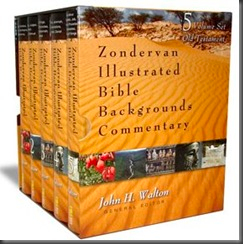
Book Review: ZIBBCOT Vol 4

wpid-pastedgraphic-e2h5xo4tqmmm.jpg

Special thanks to Jesse Hillman at Zondervan for a review copy of this fine volume!

After reviewing the 5th volume of the Zondervan Illustrated Bible Backgrounds Commentary, the folks at Zondervan were kind enough to send me another volume to review. This volume (volume 4) covers the major prophets: Isaiah, Jeremiah, Lamentations, Ezekiel, and Daniel.

Many of the comments I made regarding the fifth volume also apply to the fourth. The work is full of background from the literature of the Ancient Near East (ANE). We have ANE citations by everyone from the Egyptians, to the Babylonians, and Akkadians. The shear amount of literature we have from the ANE is astounding, and the editors put it to good use in elucidating the Biblical texts.

In addition to the normal commentary on individual verses, the volume is full of helpful articles on a given topic. One interesting article I came across in Isaiah was on “Dating Methods.” I’ve always wondered how we were able to get such precise dates for events hundreds of years before Christ. One extraordinarily useful method is astronomy. When ancient chronologies record events in relation to an astronomical event, we can usually calculate an exact date and assign dates with that as a starting point. It makes perfect sense!

Some other articles include, “Substitutionary Rites,” “Utopian Paradise, and, “Siege Ramps.” A very broad spectrum of background material is presented. The introductory articles are also quite detailed and helpful. The introduction to Isaiah offers a brief history of Israel during the 200 years covered by the book. This is vitally important to understanding the text. The introduction to Daniel is very well written. From what I can tell, it handles the issue of genre quite well, giving explanations of the various types of literature contained in Daniel and providing parallels to other ANE works. However, the commentary doesn’t take some suggestions to their full conclusion. The author doesn’t outright state that Daniel may have been written much later than the events portrayed in the text. It is suggested that the author of Daniel may have taken a well known literary medium (crafting history in the form of prophecy) and adapting it to his own means. But it isn’t stated outwardly that perhaps the work was written much later than the events it portrays. The reader is left to make the connection for themselves.

In sum, I heartily recommend these volumes to anyone seeking historical and cultural background knowledge for the world behind the Old Testament. They reveal to us the world into which God spoke his scriptures, and they help us better understand the message of these scriptures we have received. We not only have words, but also hundreds of pictures of artifacts to help the more visually minded place themselves there. There will always be cultural distance between a 21st century reader and the world of the Old Testament, but these works go a long way in bridging that distance. Pastors, students, and scholars (what a bibliography!) alike will find much to love about this series.

~alex

ZIBBCOT on Jonah

One of the passages we dug into this weekend at Spring Retreat for Chi Alpha was Jonah. Being curious about the exegesis we did together, I naturally pulled out ZIBBCOT Volume 5. John Walton, whose book on Genesis 1 I loved, had some helpful things to point out. One interesting point was that at this point in history (760-750 BC, if we take the traditional date), Assyria hadn’t been a threat to Israel for a generation, and wouldn’t be for a while after Jonah dies. This is curious, since we understood most of Jonah’s obstinacy from the brutal reputation the Assyrians had. I suppose Jonah could’ve been brought up on stories of Assyrian atrocities, but it does make his rebellion that much more curious.

~alex

Book Review: ZIBBCOT Volume 5

ZIBBCOT

Special thanks to Jesse Hillman at Zondervan for a review copy of this fine volume!

Before I jump in, I should share a little of my own background (insert pun apology here).  I’m nowhere near an Old Testament expert.  I have some decent background knowledge for the New Testament, (at least for an interested layman) but the OT is a different story.  For this reason I jumped at the chance to review an OT commentary, hoping it would help me appreciate the OT more.  While the series’ focus is on historical background, it is a valuable resource that any interested layperson or pastor could put to good use.

Now for the review.  First of all, some specifics are in order.  I received volume 5 which covers the wisdom literature (Job, Psalms, Proverbs, Ecclesiastes, and Song of Songs) and the minor prophets (Hosea – Malachi).  Each book has an introduction, each of which vary in length.  Most are rather extensive, though some books with scant information are shorter (Joel for example).  The introductions give information on dating, context, and the audience of the book.  The contents of the commentary are broken down by section and verse, following the normal format we see in other commentaries.  There is a plethora of end-notes and bibliographic information to further your research if you so desire.  Additionally, there is an introductory essay on comparative studies which was quite helpful to someone who was largely ignorant of the discipline.

There is a lot to like in this series.  What has impressed me most of all is the abundance of extant literature we have from the Ancient Near East.  We have Mesopotamian sources, Egyptian sources, Babylonian sources, Assyrian sources, Akkadian sources, and many others.  There’s a wide range of dates too, going as far back as the second millennium B.C.  All of these texts and records are brought to bear on the Biblical text in the relevant moments.  The volume also has brief articles interspersed throughout on a single topic of note.  Some examples include “Hymnic Doxologies” in Amos and “Divine Sonship” in the Psalms.  These typically go into more detail than the textual notes. 

As the name would indicate, there are tons of pictures in this series.  They are very well done.  I’m not a particularly visual person, but even for me they help connect the text in question to its historical context.  There are pictures to be found on nearly every page.  Often they take up half a page, and the quality is up-to-par.  They range from pieces carved in stone (murals?), to pottery and tablets.  Maps are also included at important points. 

Even with all the good things going for it, there are a few qualifiers to give the volume.  First, this isn’t a general purpose commentary, nor is it trying to be.  Detailed textual note are completely absent.  Instead, we’re treated to a rich assortment of historical background.  Second, it would be nice to have an article discussing in broad terms the various cultures which are cited in the text.  As an OT neophyte, I have very little basis to compare an Ugaritic citation with say, an Akkadian or Mesopotamian text.  Explaining these civilizations in the introduction would have helped me a great deal as I tried to make sense of the different sources.  At least a brief trace of the rise and fall of the culture in question.

All in all, the Zondervan Illustrated Bible Backgrounds Commentary on the Old Testament is a great series.  This volume has proved very useful recently as I’ve been reading through the Old Testament.  If you’re wanting to gain a richer understanding for the Old Testament, I’d definitely recommend this series.  Comparative studies have too long been ignored by evangelicals (myself included!) but volumes like these stand ready to help us pick the rich fruit that the discipline has left us.

Election for the Sake of All

I was listening to a podcast the other day (godpod from HTB in London), and came across a fascinating interpretation of election, or God’s choice of people to be saved.  It’s a tough doctrine to think about.  Some say that God chooses (elects) only particular persons to be saved.  The logical implication of this is that God chooses some to be damned, if only implicitly.  I’ve always found that hard to reconcile with the love of God, and it’s perhaps the biggest reason I’m not a Calvinist.  The proposal I came across concerning election turned the doctrine on its head.  Basically, instead of election being for the sake of the elect, it is for the sake of all.  Instead of God choosing the chosen people for the sake of the chosen people, it is for the sake of all.

The group discussing it traced lightly over Adam, Abraham, and Israel.  God’s choice runs through the whole Old Testament as a major theme.  God chooses Adam to exercise Godly dominion and care for his creation separate from all the other created beings.  God chooses Noah to preserve a remnant to repopulate the earth.  God chooses Abraham to bless the whole world.  He chooses Isaac, Jacob, Joseph, and all the children of Israel to bear his message.  He chooses the kings and the prophets.  In no case was the election for the sake of the elect;  rather it was for the sake of those who the elect would serve.  Adam’s election was not for Adam; it was for the whole creation.  Abraham’s election was for the good of the whole earth.  “The scripture foresaw that God would justify the Gentiles by faith and announced the gospel in advance to Abraham, ‘all nations will be blessed through you.’”  (Galatians 3:8)

Tracing the idea further, God’s choice of Isaac, Jacob, and Joseph must be seen as actions to create and sustain the promise to Abraham.  God’s choice of Moses was not for Moses.  It was for Israel, and in turn all those whom Israel was called to bless.  The same with the judges, the kings, and the prophets.  Ultimately we arrive at Jesus, who is the ultimate Elect one.  He is God’s chosen vessel to redeem humanity.  All of God’s choices and actions prior to him come to climax in him.  All election after Jesus stands in the shadow (or light perhaps) of his life, death, and resurrection.  But even Jesus’ election was not for him, but because God loved the world, and longed to get the whole creation project back on track, to redeem and restore it.

This has huge implications for how we understand God’s choice of us.  We are not chosen to sit on a pew and “sit, soak and sour,” as my pastor used to say.  We are instead God’s chosen vessel to bring redemption and restoration to the whole world.  Our election is rooted not only in God’s love for us, but it must go forward into our vocation to “bless all nations.”  This idea is much more challenging.  It compels us to always look beyond ourselves, to look to a creation which is “groaning in the pains of childbirth,” eagerly yearning for the “revelation of the children of God.”  God chooses us that he may “choose” others.  Our faithfulness to this call matters.

Happy 2 years!

This post is dedicated to my wonderful girlfriend of two years.  It’s been a wonderful two years Brianna, and Lord willing there will be many more.  I wouldn’t normally post about it here, except that she got me John Walton’s The Lost World of Genesis One, which I will enjoy immensely.  I also received a review copy recently from the fine folks at Zondervan Academic of another of Walton’s projects, namely Volume 5 of the Zondervan Illustrated Bible Backgrounds Commentary of the Old Testament.  Reviews and reflections on both should be coming along shortly.

~alex

The Bible in 90 Days: Reflections so far

I’ve begun a plan recently that will take me through the entire Bible in 90 days.  I’m hoping it will give me a better sense of the broad Story of the Bible, especially in the Old Testament. It’s been challenging so far (I’m on day 18, in Judges), but I’m starting to see budding in my understanding and appreciation.  One thing that fascinates me is how these writings have defined a people for thousands of years: first the Jewish people and then the Christians as well.  Those who wrote the New Testament would have been immersed in these stories, probably having most of them memorized.  It was largely Israel’s story of enslavement, exodus, rise and fall which drove their thinking.

What strikes me most of all so far is how candid the stories are.  The authors, and in turn the Spirit guiding them, was not concerned with dressing things up, or glazing over the difficult parts.  We see the full falleness presented, both of the greatest heroes and the darkest villains.  You have Moses, on one hand parting the red sea and interceding between Yahweh and Israel, great things!  On the other hand, you have him getting so mad with this stubborn group of people that he finally hits a rock too hard, which incurs discipline from Yahweh.  Leadership is not without its challenges.  I’ve a feeling we should give them a little slack some times.

Then you have stories which are just funny.  How about Balaam?  A threatened king tries repeatedly to pay Balaam to curse the Israelites.  Balaam probably shouldn’t have even entertained the king’s request, (made evident by a talking she-ass) but he does.  Instead of pronouncing a curse, Balaam blesses the Israelites 3 times!  I’m sure the situation would have been quite grave, but several thousand years later it’s hard not to laugh ;-)

Summing up, I guess these writings are still quite foreign to me.  I don’t really understand the context in which these things happened, but they are becoming more familiar.  I’m hoping that familiarity will breed deeper appreciation, instead of contempt; so far we’re heading in the right direction :-)

~alex