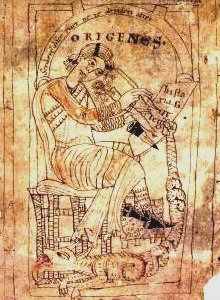
Origen on Soul Kidneys (Pt. 2)

The second part in a series I originally posted in 2017.

Origen continues his discussion on the education of Jesus’ soul. He here explains how the kidneys mentioned in the passage refer not to bodily kidneys, but are an analogy for a part or faculty of the soul. “Soul kidneys” have ideas and concepts in potential or seed form, and these then rise to the “heart of the soul” where they are actualized.

Origen also has us consider at length Christ’s soul, both before and after the incarnation. He seems to think that Christ’s soul was instructed through its union with the divine Logos, and that it has arrived on earth with certain “instructing principles” or something of the sort within it. During the incarnation the “instructing principles” are activated (in Origen’s language, “rise to the heart of the soul”) and guide the human Jesus. This is how he was able to live completely sinlessly.

(I’ve made a few suggestions to the transmitted text, which I discuss below.)

English Translation

(3) This saying i.e. “I will praise the Lord who instructed me” and the saying that follow are spoken in the character of Jesus. We need God’s grace to explain this next one, which says, “Even in the night my kidneys taught me.” It is not easy to explain how Christ’s kidneys taught him. Let us even grant that his kidneys taught him— Why was this “in the night”? For it is not just that his kidneys taught him, but “his kidneys taught him in the night”. I do not know of places outside the scriptures where the kidneys are treated as having something to do with matters of understanding or aptitude like they are in the scriptures.1 For in the scriptures, when God searches the hidden things he searches hearts and kidneys (e.g. Ps. 7:10, 25:2, etc.). Perhaps he searches the kidneys when he searches and scrutinizes those things that are already present like seeds within the soul and have not yet risen up to the heart.

These kidneys then are not bodily ones, but invoked in a manner analogous to the heart. (After all, when the heart is said to be pure and the one who is pure in heart is said the be blessed, we must not perceive what is blessed as something in the body, which we see even in animals.) I am saying therefore that these kidneys, in a manner analogus to “purity of heart”, possess the roots and beginnings of thoughts and that these teach Jesus’ soul. The one who says, “you will not forsake my soul to Hades” came to earth with these roots and beginnings of thoughts. It is as if I were to say analogously about the human soul that in its’ kidneys it has thoughts and the seeds of ideas in potential before they rise to the heart. These are either for worse— for whoever sins has done evil from that point— or they are for better, since the good also seems to have come about somehow from that point in the past.

So then, if you understand what I have entrusted to you about the kidneys, look closely at the soul of Jesus as it descends from heaven. “For no one has ascended to heaven except he who has descended from heaven.” This is not the son of god, not the first born of all creation, but the son of man. After you have looked at that soul, which did not consider equality with God something to exploit, but emptied itself and took on the form of a servant, contemplate also with me this soul.2 Look at how it stores up within itself teachings and concepts, and puts them not in the heart, but in the kidneys so, that they can ascend from the kidneys to the heart. Look for me at how the soul of Jesus comes possessing corrective and instructive principles, not in his bodily kidneys, but in those of his soul. Because these principles came along with that soul, he knew no sin, nor committed sin, nor even spoke sinfully as a man.

Greek Text

(3) Τούτου δέ ἐστι φωνὴ καὶ ἡ ἑξῆς, δεομένη τῆς ἀπὸ τοῦ θεοῦ χάριτος εἰς σαφήνειαν, ἡ λέγουσα· ἔτι δὲ καὶ ἕως νυκτὸς επαίδευσάν με οἱ νεφροί μου. Νεφροὶ Χριστοῦ πῶς παιδεύουσιν αὐτόν, οὐκ εὐχερὲς διηγήσασθαι. Καὶ ἔστω ὅτι οἱ νεφροὶ αὐτοῦ παιδεύουσιν αὐτόν· τί καὶ ἕως νυκτός; Οὐ γὰρ ἁπλῶς παιδεύουσιν αὐτὸν οἱ νεφροὶ αὐτοῦ, ἀλλὰ “ἕως νυκτὸς παιδεύουσιν αὐτὸν οἱ νεφροὶ αὐτοῦ”. Οὐκ οἶδα δὴ τοὺς νεφροὺς παραλαμβανομένους τοῖς ἔξω τοῦ λόγου εἰς τὰ περὶ συνέσεως ἢ ἐντρεχείας πράγματα ὡς ἐν τῇ γραφῇ· ἐν γὰρ τῇ γραφῇ ὁ θεὸς ἐτάζων τὰ κρυπτά, ἐτάζει καρδίας καὶ νεφρούς. Καὶ τάχα τοὺς νεφροὺς ἐτάζει, ὅτε τὰ ἔτι ἐναποκείμενα σπερματικῶς τῇ ψυχῇ καὶ οὐδὲ προαναβεβηκότα ἐπὶ τὴν καρδίαν ἐρευνᾷ καὶ ἐξετάζει.

Οὗτοι δὴ οἱ νεφροί, οὐχ οἱ σωματικοί, οἱ ἀναλόγως ὀνομαζόμενοι καρδίᾳ (οὐδὲ γὰρ ὅτε καρδία λέγεται καθαρὰ καὶ μακάριος ὁ καθαρὸς τῇ καρδίᾳ, σώματι δεῖ νοῆσαι τὸ μακαριζόμενον, ὃ καὶ ἐν τοῖς ἀλόγοις ζῴοις βλέπομεν), οὗτοι οὖν οἱ νεφροί φημι, οἱ ἀναλόγους τῇ καθαρότητι τῆς καρδίας ἔχοντες τὰς ῥίζας καὶ τὰς ἀρχὰς τῶν νοημάτων, μεθ’ ὧν ἐπιδεδήμηκεν ὁ λέγων οὐκ ἐγκαταλείψεις τὴν ψυχήν μου εἰς τὸν ᾅδην, παιδεύουσι τὴν ψυχὴν τοῦ Ἰησοῦ. Ὡς εἰ ἔλεγον καὶ περὶ ἀνθρωπίνης ψυχῆς τὸ ἀνάλογον, ἐχούσης ἐν τοῖς νεφροῖς τὰ πρὸ τοῦ ἀνατεῖλαι ἐπὶ τὴν καρδίαν νοήματα καὶ διαλογισμῶν σπέρματα, ἔνδον προόντα δυνάμει, εἴτε τὰ χείρονα— ὃς γὰρ ἥμαρτεν, ἐποίησεν τὸ πονηρὸν ἀπὸ τότε—, εἴτε τὰ βελτίονα, ἐπεὶ καὶ τὸ ἀγαθὸν ἔοικεν ἀπὸ τότε γεγονέναι τισίν.

Εἰ οὖν νοεῖς τὰ παρειλημμένα μοι περὶ τῶν νεφρῶν, ὅρα τὴν ψυχὴν τοῦ Ἰησοῦ καταβαίνουσαν ἀπὸ τοῦ οὐρανοῦ· οὐδεὶς γὰρ ἀναβέβηκεν εἰς τὸν οὐρανόν, εἰ μὴ ὁ ἐκ τοῦ οὐρανοῦ καταβάς· οὐχ ὁ υἱὸς τοῦ θεοῦ, οὐχ ὁ πρωτότοκος πάσης κτίσεως, ἀλλ’ ὁ υἱὸς τοῦ ἀνθρώπου. Καὶ ἰδών μοι ἐκείνην τὴν ψυχήν, ἥτις οὐχ ἁρπαγμὸν ἡγήσατο τὸ εἶναι ἴσα θεῷ, ἀλλ’ ἑαυτὴν ἐκένωσεν μορφὴν δούλου λαβοῦσα, νοῶν μοι ταύτην τὴν ψυχήν, ὅρα αὐτὴν ἐναποθησαυρίζουσαν δόγματα καὶ νοήματα, καὶ ἐναποτιθεῖσαν οὐ τῇ καρδίᾳ ἀλλὰ τοῖς νεφροῖς, ἵνα ἀπὸ τῶν νεφρῶν ἀναβῇ ἐπὶ τὴν καρδίαν· ὅρα μοι τὴν ψυχὴν Ἰησοῦ ἐρχομένην, ἐπὶ τῶν οὐ σωματικῶν <ἀλλὰ ψυχικῶν> νεφρῶν ἔχουσαν τὰ παιδεύοντα καὶ τὰ ἐπιστρέφοντα, δι’ ἃ συνεπιδημήσαντα ἐκείνῃ τῇ ψυχῇ οὐκ ἔγνω ἁμαρτίαν καὶ οὐχ ἥμαρτεν καὶ οὐκ ἐλάλησεν ἁμαρτίαν ἄνθρωπος ὤν.

Text Critical Issues

The edition and ms carry:

ὅρα μοι τὴν ψυχὴν Ἰησοῦ ἐρχομένην, ἐπὶ τῶν οὐ σωματικῶν νεφρῶν ἔχουσαν τὰ παιδεύοντα καὶ τὰ ἐπιστρέφοντα

This would translate to something like, “Look for me at the soul of Jesus coming with principles not in the bodily kidneys that teach and direct.”

I’d suggest inserting ἀλλὰ ψυχικῶν after σωματικῶν so that we have:

ὅρα μοι τὴν ψυχὴν Ἰησοῦ ἐρχομένην, ἐπὶ τῶν οὐ σωματικῶν <ἀλλὰ ψυχικῶν> νεφρῶν ἔχουσαν τὰ παιδεύοντα καὶ τὰ ἐπιστρέφοντα

The two words in question would have fallen out by homoeoteleuton. The addition better brings out the distinction between the two kinds of kidneys.

  1. In Plato’s Timaeus, the lowest part of the soul, the “desiring” (τὸ ἐπιθυμητικόν) part is placed between the navel and the kidneys, around or in the liver. Yet what Origen describes here does not seem to correspond perfectly to this portion of the soul as described in Platonic philosophy. That faculty is responsible for desires for food and sex, and has little positive role vis-à-vis the higher faculties. Indeed, the job of the rest of the soul (i.e. the “spirited” part and the “rational” part) is to keep it in check.
  2. The language is rather confusing. Origen apparently means by “that soul” (ἐκείνην ψύχην) Jesus’ soul as depicted in Phil 2:6ff. and Eph. 4:10. By “this soul” he means Jesus’ soul as depicted in passage here in Ps. 15. So he is not actually referring to two souls, though that’s certainly the most natural reading of the Greek.

Origen on Soul-Kidneys (Pt. 1)

I repost here the first in a series of excerpts from Origen’s second homily in Psalm 15. I originally posted these in 2017 on a prior incarnation of my personal website.

I begin here a short series on another fascinating passage from the new Psalm Homilies of Origen. This one comes from the second homily on Ps. 15 (N.B. My references throughout use the numbering of the Greek psalms, which are frequently one off from the Hebrew numbering used in most English bibles). Origen has to explain a few difficult matters. As the New Testament authors read this psalm christologically, Origen needs to explain vs. 7, “I will praise the one who instructed me; even in the night my kidneys taught me.” How did Jesus need instruction? and how would his kidneys play a role in that? Origen takes up the first question in the passage below.

(Note also, I’ve made a few changes to the text, which I’ll discuss at the end.)

English Translation

(2) The beginning of our reading for today was, “I will bless the Lord who instructed me.” Christ is understood as speaking here in reference to his humanity. You will distinguish in the scriptures that sometimes it says “Lord,” which is understood as referring to divinity, and sometimes it says “Christ,” which is understood as referring to humanity. What is said in this psalm is said by the character of Christ, understood humanly. For “my flesh will dwell in hope” is something a person says, and “you will not forsake my soul to Hades” (Ps. 15:9–10) is something that someone who has a soul says. When you find “his name that abides in the heavens since before the sun and before the moon, and before the generation of generations” and “he will come down like rain on the grass and like dew drops dripping on the earth” (v. Ps. 71:15–17) and other exalted statements of this sort, you should understand them as referring to his divinity, whether in reference to the firstborn of all creation, or to his soul before the incarnation.

And yet he says now, “I will bless the Lord” (that is, the Father) “who instructed me.” Who could be the speaker other than, as I said before, that person long prophesied? Isaiah also speaks about him: “A rod will come out from the root of Jesse, and a bud from the root will arise, and the Spirit of God will rest upon him, the Spirit of Wisdom and Understanding.” If the Spirit of Understanding rests on the one from the root of Jesse, who according to flesh was from the seed of David, then the one born of David’s seed rightly says, “I will bless the Lord that instructed me.” For the first born of all creation was made one with the Savior, understood as a human. For this reason, perceiving the union he says, “I will bless the Lord that instructed me.”

Greek Text

(2) Ἦν δὲ ἡ ἀρχὴ τοῦ σήμερον ἀναγνώσματος· εὐλογήσω τὸν κύριον τὸν συνετίσαντά με, Χριστὸς ὁ κατὰ τὸ ἀνθρώπινον νοούμενος. Ἐν γὰρ ταῖς γραφαῖς διαστέλλεις πότε λέγει κύριος, ὁ κατὰ τὴν θεότητα νοούμενος, καὶ πότε λέγει Χριστός, ὁ κατὰ τὸ ἀνθρώπινον νοούμενος. Τὰ δὴ ἐν τῷ ψαλμῷ νῦν ἀπὸ Χριστοῦ προσώπου λέγεται τοῦ νοουμένου κατὰ τὸ ἀνθρώπινον. Τὸ γὰρ ἡ σάρξ μου κατασκηνώσει ἐπ’ ἐλπίδι τοῦ ἀνθρώπου φωνή ἐστι· καὶ τὸ οὐκ ἐγκαταλείψεις τὴν ψυχήν μου εἰς τὸν ᾅδην τοῦ χρωμένου ψυχῇ ἐστι φωνή. Ἐπὰν δὲ εὕρῃς τὸ πρὸ τοῦ ἡλίου διαμένῃ τὸ ὄνομα αὐτοῦ ἐν τῷ οὐρανῷ καὶ πρὸ τῆς σελήνης γενεᾶς γενεῶν· καὶ καταβήσεται ὡς ὑετὸς ἐπὶ πόκον καὶ ὡσεὶ σταγόνες στάζουσαι ἐπὶ τὴν γῆν, καὶ τοιαῦτα περὶ αὐτοῦ δοξολογούμενα, νόει αὐτοῦ τὴν θεότητα, εἴτε κατὰ τὸν πρωτότοκον πάσης κτίσεως, εἴτε κατὰ τὴν πρὸ τοῦ σώματος ψυχὴν αὐτοῦ.

καὶ νῦν δὲ εὐλογήσω, φησί, τὸν κύριον, δηλονότι τὸν πατέρα, τὸν συνετίσαντά με. Τίς ἐστιν ὁ λέγων ταῦτα ἢ ὁ προφητευόμενος, ὡς προεῖπον, ἄνθρωπος; Περὶ οὗ λέγει καὶ Ἠσαΐας· ἐξελεύσεται ῥάβδος ἐκ τῆς ῥίζης Ἰεσσαὶ καὶ ἄνθος ἐκ τῆς ῥίζης ἀναβήσεται, καὶ ἀναπαύσεται ἐπ’ αὐτὸν πνεῦμα τοῦ θεοῦ, πνεῦμα σοφίας καὶ συνέσεως. Εἰ ἀναπέπαυται τὸ πνεῦμα τῆς συνέσεως ἐπὶ τὸν ἐκ ῥίζης Ἰεσσαί, γενόμενον ἐκ σπέρματος Δαυὶδ κατὰ σάρκα, καλῶς ὁ γεννώμενος ἐκ σπέρματος Δαυὶδ κατὰ σάρκα φησὶ τὸ εὐλογήσω τὸν κύριον τὸν συνετίσαντά με. Ἡνώθη γὰρ ὁ πρωτότοκος πάσης κτίσεως, [τὸ πνεῦμα τῆς βουλῆς καὶ ἰσχύος], τῷ σωτῆρι τῷ νοουμένῳ κατὰ τὸ ἀνθρώπινον, γεννωμένῳ ἐκ σπέρματος Δαυὶδ κατὰ σάρκα. Καὶ οὕτως λέγει, τῆς ἑνώσεως ἀντιλαμβανόμενος, τὸ εὐλογήσω τὸν κύριον τὸν συνετίσαντά με.

There is plenty of fascinating material here. Origen is employing partitive exegesis, i.e., some statements in scripture apply to Christ’s humanity, and some to his divinity. Reference to Christ’s instruction properly refers to Christ as a human being. This is even more complicated in Origen’s scheme than in some later ones, because Origen holds to the preexistence of souls. Not only does Jesus as Logos preexist his body, but his human soul preexists his body, or so it seems. As such, the “divine statements” about Jesus in the Old Testament could conceivably apply either to Jesus’ preexistent soul, or his status as “Firstborn over all creation,” i.e., divine Logos.

TEXTUAL ISSUES

I see two difficulties in text. First, the matter of εἴτε κατὰ τὸν πρωτότοκον πάσης κτίσεως, εἴτε κατὰ τὴν πρὸ τοῦ σώματος ψυχὴν αὐτοῦ. (“whether in reference to the firstborn of all creation, or to his soul before the incarnation”)

The edition prints:

Ἐπὰν δὲ εὕρῃς τὸ πρὸ τοῦ ἡλίου διαμένῃ τὸ ὄνομα αὐτοῦ ἐν τῷ οὐρανῷ καὶ πρὸ τῆς σελήνης γενεᾶς γενεῶν· καὶ καταβήσεται ὡς ὑετὸς ἐπὶ πόκον καὶ ὡσεὶ σταγόνες στάζουσαι ἐπὶ τὴν γῆν, καὶ τοιαῦτα περὶ αὐτοῦ δοξολογούμενα, νόει αὐτοῦ τὴν θεότητα.

εἴτε κατὰ τὸν πρωτότοκον πάσης κτίσεως, εἴτε κατὰ τὴν πρὸ τοῦ σώματος ψυχὴν αὐτοῦ, καὶ νῦν δὲ εὐλογήσω, φησί, τὸν κύριον, δηλονότι τὸν πατέρα, τὸν συνετίσαντά με.

It is unclear to me how to make sense of εἴτε … εἴτε, if we join it to what follows. We’d need to translate, “Whether in reference to the firstborn of all creation, or to his soul before the incarnation, he now says, ‘I will praise the one who instructed me.'” It’s unclear what καί and δέ are doing in this case. It’s also unclear to me how this would fit with the explanation of “Lord” as a reference to “Father” in the latter part of the sentence. It seems much better to join εἴτε … εἴτε to what precedes. καί and δέ make better sense, and we can then translate as I have above: the question is whether a statement asserting Christ’s divinity refers to his preexistent soul, or his status as “Firstborn of all creation.”

The other issue is at the end, and pertains to “the Spirit of Counsel and of Strength.” The edition (and the ms) present:

Ἡνώθη γὰρ ὁ πρωτότοκος πάσης κτίσεως, τὸ πνεῦμα τῆς βουλῆς καὶ ἰσχύος, τῷ σωτῆρι τῷ νοουμένῳ κατὰ τὸ ἀνθρώπινον, γεννωμένῳ ἐκ σπέρματος Δαυὶδ κατὰ σάρκα.

This would have to translate to something like, “For the Firstborn of all creation, the Spirit of counsel and of strength, was united to the Savior understood in his humanity, who was born from the seed of David according to the flesh.”

“Spirit of Counsel and of Strength” seems to me an intrusion on the text. Origen has just cited Is. 11:2-3, and stops before the “Spirit of Counsel and of Strength” is mentioned, so perhaps this belongs above. As it stands, we have to understand that Origen identifies “Firstborn of All Creation” with the “Spirit of Counsel and of Strength,” i.e. that he confuses Son and Spirit.

We will see below that he does think that the union of the two natures can be described as a πνεῦμα (spirit), but not in a manner that confuses him with the Holy Spirit. He bases that on 1 Cor 6:17 (“the one who joins himself with the Lord is one spirit”).

Gr. naz. Adv. iram 15–25

Below you’ll find nice Homeric simile in Gregory’s long iambic poem against anger (carm. 1.2.25). I treat this in the dissertation, and post my poetic rendering here. The text comes from PG 37, though I’ve consulted the readings of Oberhaus 1991.

δεῖ δ’, ὡς ἔοικε, μή τι μαλθακὸν λέγειν, [15]
κακοῦ τοσούτου τῷ λόγῳ προκειμένου·
ἀλλὡς πυρὸς βρέμοντος ἀγρίαν φλόγα,
πηδῶντος, αἰθύσσοντος ἐντινάγμασι
πολλοῖς, ἄνω ῥέοντος ἐμψύχῳ φορᾷ,
λάβρως ἀεὶ τὰ πρόσθεν οἰκειουμένου, [20]
ὕδωρ, κόνιν πέμποντας εὐνάσαι βίᾳ·
θῆρα λόχμης ἐκφανέντα συσκίου,
φρίσσοντα, πῦρ βλέποντα, ἐξαφρούμενον,
μάχης ἐρῶντα, καὶ φόνων καὶ πτωμάτων,
λόγχαις, κυνηγοῖς, σφενδόναις καταιχμάσαι [25]

For one must, as is meet, avoid all languor, [15]
when such an ill is set before one’s reason,
and quench, like those that dirt and water cast
against a fire that belches wild flame,
and leaps and jumps with numerous shakes,
and climbs aloft with motion from within
greedily making all that was its own; [20]
or slay, as hunters take the wild beast
with spears and slings, when it appears from deep
within the shadowed grove, with eyes ablaze
and hair erect, foam oozing from its mouth,
lusting for battle, corpses and their death. [25]

Bibliography

Oberhaus, M. 1991. Gregor von Nazianz. Gegen den Zorn : (carmen 1, 2, 25) : Einleitung und Kommentar. Paderborn: Schöningh.